
In August 2026, the global crude oil market is in a delicate balance. As the global economy gradually recovers, crude oil demand continues to grow, while the supply side faces multiple factors including OPEC+ production cuts, fluctuations in US shale oil production, and energy transition. This article will analyze current oil price trends and their driving factors from the perspective of global crude oil supply and demand data, providing strategic references for investors.
Analysis of Global Crude Oil Supply and Demand Status
According to the latest report from the International Energy Agency (IEA), global crude oil average daily demand in the first half of 2026 was approximately 102 million barrels, an increase of about 2.5% compared to the same period last year. This growth mainly came from emerging Asian economies, particularly the strong recovery of China and India's economies. Meanwhile, global crude oil supply was about 101 million barrels per day, slightly below demand levels, which supported oil prices.
In terms of supply structure, OPEC+ countries still control about 40% of global crude oil production. Although OPEC+ decided to extend the production cut policy to the end of 2026 at the beginning of the year, actual implementation has varied. Core member countries like Saudi Arabia and the UAE have strictly adhered to production cut commitments, while some countries such as Nigeria and Angola have failed to fully meet targets due to capacity limitations and technical issues.
Demand Side: Asia Leading Global Crude Oil Consumption Growth
The Asian region, especially China and India, has become the main engine of global crude oil demand growth. As the world's second largest economy, China's manufacturing recovery and transportation development have driven steady growth in crude oil consumption. With accelerated industrialization and expanding middle class, India's crude oil demand shows strong growth momentum.
Notably, despite the ongoing global energy transition, the dominant position of crude oil in the energy structure is unlikely to be shaken in the short term. The IEA predicts that by 2030, crude oil will still account for about 30% of global energy consumption, indicating that crude oil demand will remain relatively stable in the coming years.
Supply Side: The Game Between OPEC+ Production Cuts and Shale Oil Recovery
As an important regulator of the global crude oil market, OPEC+'s production cut policies have a decisive impact on oil prices. In 2026, OPEC+ continued to maintain a daily reduction of about 3 million barrels, which effectively alleviated market oversupply pressure and supported oil prices to fluctuate around $80 per barrel.
Meanwhile, the US shale oil industry is gradually recovering after a downturn from 2020 to 2022. Thanks to technological advances and cost control, US shale oil producers can now achieve profitability when oil prices remain above $70 per barrel. According to data from the US Energy Information Administration (EIA), US crude oil average daily production reached 12.8 million barrels in the first half of 2026, approaching historical peak levels.
Impact of Geopolitical Factors on Crude Oil Supply and Demand
Geopolitical factors have always been important factors affecting crude oil supply and prices. In 2026, the situation in the Middle East remains complex, with factors such as the Iranian nuclear issue, the Yemen conflict, and the Saudi-Iran relations normalization process that could suddenly change the regional crude oil supply landscape.
In addition, the ongoing Russia-Ukraine conflict continues to have a profound impact on the global crude oil market. Although Western sanctions against Russia's energy have been relaxed, Russian crude oil exports still face numerous restrictions, leading to subtle changes in the global crude oil supply structure and supporting oil prices.
Long-term Impact of Global Energy Transition on Crude Oil Supply and Demand
With the acceleration of global carbon neutrality, the rapid development of renewable energy and electric vehicles will have long-term impacts on crude oil demand. The International Renewable Energy Agency (IRENA) predicts that by 2030, the share of renewable energy in the global energy structure will increase to 40%, which will gradually replace some crude oil demand.
However, the energy transition is a gradual process, and crude oil is difficult to be completely replaced in the short term. Especially in sectors such as aviation, shipping, and heavy industry, crude oil still has irreplaceable advantages. Therefore, crude oil demand will remain relatively stable for quite a long time, but the growth rate may gradually slow down.
Outlook for Global Crude Oil Market in the Second Half of 2026
Looking ahead to the second half of 2026, the global crude oil market may show the following characteristics:
- In terms of demand: As winter approaches in the Northern Hemisphere, heating oil demand will increase, while the continuous recovery of the Asian economy will support stable growth in crude oil demand.
- In terms of supply: OPEC+ will continue to maintain production cut policies, but US shale oil production may continue to grow, partially offsetting the effect of OPEC+ cuts.
- In terms of prices: The basic balance of supply and demand will keep oil prices fluctuating in the range of $75-85 per barrel, but geopolitical risks may lead to short-term sharp price fluctuations.
Strategic Implications for PTT Group
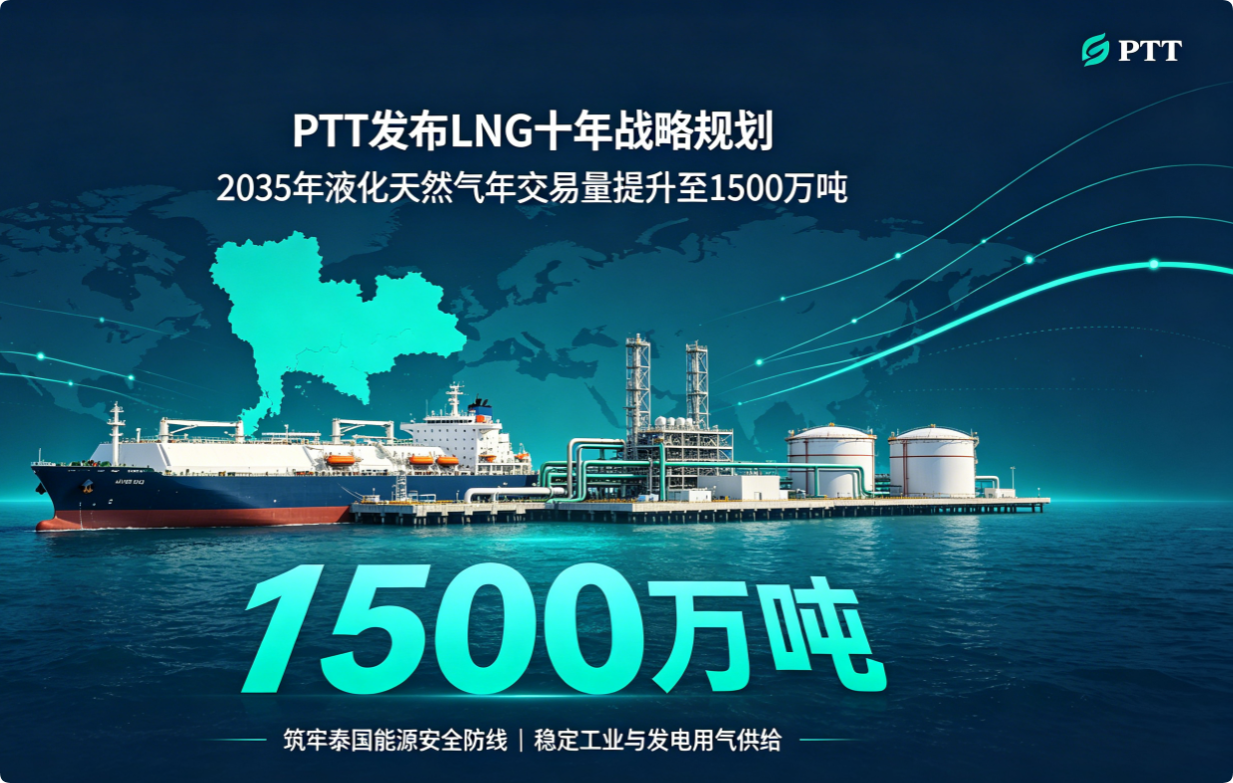
As Thailand's largest energy company, PTT Group needs to closely monitor changes in global crude oil supply and demand and formulate flexible strategies to respond to market fluctuations. On one hand, PTT should continue to optimize its upstream oil and gas asset portfolio, improving resource recovery rates and operational efficiency; on the other hand, it should increase investment in renewable energy, reduce dependence on traditional oil and gas businesses, and achieve diversification of its energy structure.
In addition, PTT can leverage Thailand's geographical advantages to strengthen energy cooperation with ASEAN countries, expand regional markets, and reduce dependence on a single market. At the same time, PTT should strengthen technological innovation to improve refining efficiency and product added value, enhancing competitiveness in the downstream market.
How Investors Can Seize Opportunities in the Crude Oil Market
For investors, seizing investment opportunities arising from crude oil market volatility requires considering the following factors:
Fundamental Analysis
Investors should closely monitor fundamental factors such as global crude oil supply and demand data, changes in OPEC+ policies, US shale oil production, and geopolitical events. These factors will directly affect crude oil price trends and provide important references for investment decisions.
Technical Analysis
Technical analysis can help investors identify price trends and key support and resistance levels. By observing crude oil futures price charts, trading volume, and open interest, investors can better grasp market sentiment and capital flows.
Diversified Investment Strategy
Given the high volatility of the crude oil market, investors should adopt diversified investment strategies to spread risks. In addition to direct investment in crude oil futures, they can also pay attention to investment tools such as energy stocks, energy ETFs, and related derivatives.
Long-term Perspective
Although the crude oil market fluctuates sharply in the short term, in the long run, with the advancement of global energy transition, crude oil demand growth may gradually slow down. Investors should have a long-term perspective, pay attention to structural changes in the energy industry, and seize investment opportunities brought by the transition.
Conclusion
In 2026, the global crude oil market is in a critical period of supply-demand balance. The demand side continues to grow driven by economic recovery and emerging markets, while the supply side is affected by both OPEC+ production cut policies and the recovery of US shale oil. Geopolitical factors and energy transition add more uncertainty to the crude oil market.
For PTT Group, facing the complex and changing crude oil market, it should adopt flexible and diverse strategies, optimize its business structure, strengthen technological innovation, actively expand into renewable energy fields, and achieve sustainable development. At the same time, investors should closely monitor changes in global crude oil supply and demand, adopt diversified investment strategies, and seize investment opportunities arising from market fluctuations.
Looking ahead, as the global energy transition deepens, the crude oil market will face more challenges and opportunities. Only those enterprises and investors that can adapt to changes and actively transform can remain invincible in the new energy landscape.