
Energy Price Fluctuation Analysis: August 2026 Global Oil, Gas and Green Electricity Market Trends and Investment Strategies
\n\nIn August 2026, the global energy market continues to present a complex and volatile landscape. With geopolitical tensions, accelerating energy transition, and uncertainties in global economic recovery, both oil and gas prices and green electricity trading have shown significant fluctuations. As the leading enterprise in Thailand's energy sector, PTT Group is actively addressing these challenges, seeking sustainable development through diversified strategic layouts. This article will conduct an in-depth analysis of the causes, market trends, and investment opportunities of current energy price fluctuations, providing professional references for investors.
\n\nLatest Developments in Global Energy Markets
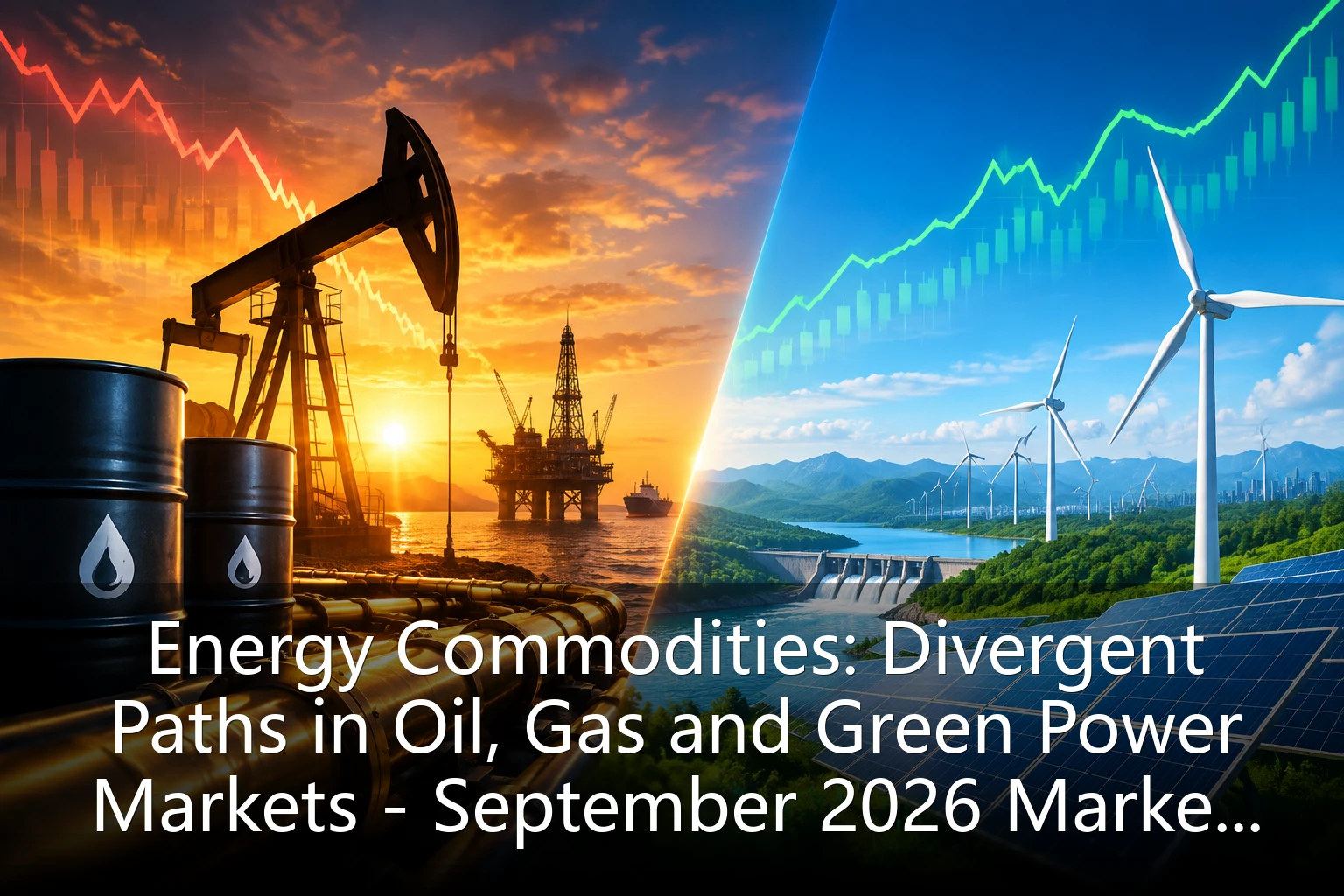
\n\nAs of mid-August 2026, the international crude oil market has shown an oscillating upward trend. Brent crude oil futures prices fluctuated in the range of $80-85 per barrel, an increase of about 15% compared to the beginning of the year. This fluctuation is mainly influenced by multiple factors: continued geopolitical tensions in the Middle East, production policy adjustments by major oil-producing countries, and stronger-than-expected recovery in global energy demand.
\n\nMeanwhile, the natural gas market presents a "divergent" situation. Asian LNG prices have reached record highs, while European natural gas inventories have increased beyond expectations, leading to significant expansion in price differences between regions. This differentiated pattern reflects that the global natural gas market is undergoing structural transformation, with supply and demand patterns being reshaped.
\n\nIn terms of the green electricity market, as countries advance their carbon neutrality goals, renewable energy trading remains active. Carbon allowance trading prices have reached new highs, providing strong support for green electricity prices. Particularly in the Southeast Asian region, although the premium for photovoltaic green electricity trading has narrowed, it maintains a relatively strong overall trend.
\n\nIn-depth Analysis of Factors Influencing Oil and Gas Price Fluctuations
\n\nThe current fluctuations in oil and gas prices are mainly influenced by the following key factors:
\n\n- \n
- Geopolitical Risks: The situation in the Middle East remains tense, with shipping security in the Strait of Hormuz threatened, leading to increased risk premiums for crude oil supply. Meanwhile, the ongoing Russia-Ukraine conflict has also had a profound impact on global energy supply chains. \n
- OPEC+ Production Policies: The OPEC+ group of oil-producing countries continues to maintain cautious production policies, with limited implementation of production increase signals, providing bottom support for oil prices. \n
- Global Economic Recovery: Despite facing inflationary pressures, the global economic recovery remains solid, with energy demand growth in Asia exceeding expectations, supporting oil and gas prices. \n
- Energy Transition Process: As the proportion of renewable energy increases, investment in traditional energy is limited, and long-term supply concerns support oil prices. \n
Notably, as an energy-importing country, Thailand faces dual challenges to its energy security: on one hand, international oil and gas price fluctuations increase import cost pressures; on the other hand, the domestic energy transition process is accelerating, and the adjustment of old and new energy structures faces a painful period.
\n\nGreen Electricity Market Development Trends and Investment Opportunities
\n\nThe green electricity market is ushering in unprecedented development opportunities. With carbon allowance trading prices continuously reaching new highs, green electricity premiums receive strong support. In the first half of 2026, global renewable energy investment exceeded traditional fossil fuels for the first time, marking a new stage in the energy transition.
\n\nIn the Thai market, the development of photovoltaic and wind power projects has accelerated, with green electricity trading volume surging. The renewable energy subsidy policies and carbon market mechanisms introduced by the government form a dual driving force, providing stable investment return expectations for green electricity projects. Data shows that the return on investment for green electricity in Thailand has approached the level of traditional energy, attracting a large influx of capital.
\n\nHowever, the green electricity market also faces challenges: grid integration issues for intermittent power sources, high energy storage costs, and the need for grid infrastructure upgrades. These issues are creating new investment opportunities, especially in smart grids, energy storage technologies, and virtual power plants.
\n\nAnalysis of Thailand's PTT Group Strategic Layout
\n\nAs Thailand's largest energy enterprise, PTT Group is actively addressing energy transition challenges, implementing a "dual-track strategy" to promote the synergistic development of traditional oil and gas businesses and green energy. In the first half of 2026, PTT announced an investment of 500 billion Thai baht in renewable energy project development, aiming to increase the proportion of renewable energy to 30% by 2030.
\n\nPTT's strategic layout is mainly reflected in the following aspects:
\n\n- \n
- Upstream Business Transformation: While maintaining advantages in traditional oil and gas exploration and development, actively developing offshore wind and hydrogen energy projects to explore low-carbon energy solutions. \n
- Downstream Business Upgrade: Promoting the transformation of refining and chemical businesses toward low-carbon, high-value-added directions, developing biofuels and carbon capture technologies. \n
- Energy Service Innovation: Expanding energy management and carbon trading services to provide comprehensive energy solutions for customers. \n
- International Market Expansion: Strengthening regional cooperation, participating in the ASEAN energy integration process, and enhancing international competitiveness. \n
PTT's transformation strategy reflects the development trend of global energy enterprises: while ensuring energy security, actively embracing carbon neutrality goals to achieve sustainable development.
\n\nStrategic Recommendations for Investors to Respond to Energy Price Fluctuations
\n\nFacing the complex and volatile energy market, investors should adopt diversified strategies to balance risk and return:
\n\n- \n
- Diversified Asset Allocation: Seek balance between oil and gas assets and green electricity assets, focusing on high-quality assets with stable cash flow and growth potential. \n
- Grasping Structural Opportunities: Focus on investment opportunities brought by energy transition, such as renewable energy, energy storage technologies, smart grids, and other fields. \n
- Focus on Policy Trends: Closely follow changes in national energy policies, especially the impact of policies such as carbon taxes and renewable energy subsidies on the market. \n
- Long-term Value Investment: Energy transition is a long-term trend, and attention should be paid to the long-term competitiveness of enterprises rather than short-term price fluctuations. \n
- Risk Management: Reasonably use derivatives such as futures and options to hedge price risks and control portfolio volatility. \n
For Thai investors, it is recommended to focus on energy enterprises with transformation advantages such as PTT, as well as renewable energy projects that benefit from Thailand's energy policies. At the same time, considering the fluctuation factors of the Thai baht exchange rate, it is advisable to appropriately allocate foreign exchange hedging instruments.
\n\nFuture Energy Market Outlook
\n\nLooking ahead, the global energy market will show the following development trends:
\n\n- \n
- Normalization of Price Fluctuations: During the energy transition period, the game between traditional energy and new energy will lead to intensified price fluctuations. \n
- Intensified Regional Differentiation: Differences in the progress of energy structure transformation in different regions will lead to differentiation in regional energy prices. \n
- Improvement of Carbon Pricing Mechanisms: The carbon trading market will become more mature, and the impact of carbon prices on energy prices will further increase. \n
- Technology-driven Transformation: Breakthroughs in technologies such as energy storage, hydrogen energy, and smart grids will reshape the energy market landscape. \n
- Deepening International Cooperation: The dual challenges of energy security and climate governance will promote the deepening of international energy cooperation. \n
For Thailand, energy transition is both a challenge and an opportunity. Through scientific planning, policy guidance, and market mechanism innovation, Thailand is expected to achieve carbon neutrality goals while ensuring energy security and cultivate new economic growth points.
\n\nIn conclusion, the energy market in August 2026 is in a critical period of transition, where price fluctuations are both risks and opportunities. Investors should maintain rationality, grasp long-term trends, and find value investment opportunities in the wave of energy transition. The practices of leading enterprises such as PTT show that the synergistic development of traditional energy enterprises and green energy will be the mainstream direction of the future energy industry.