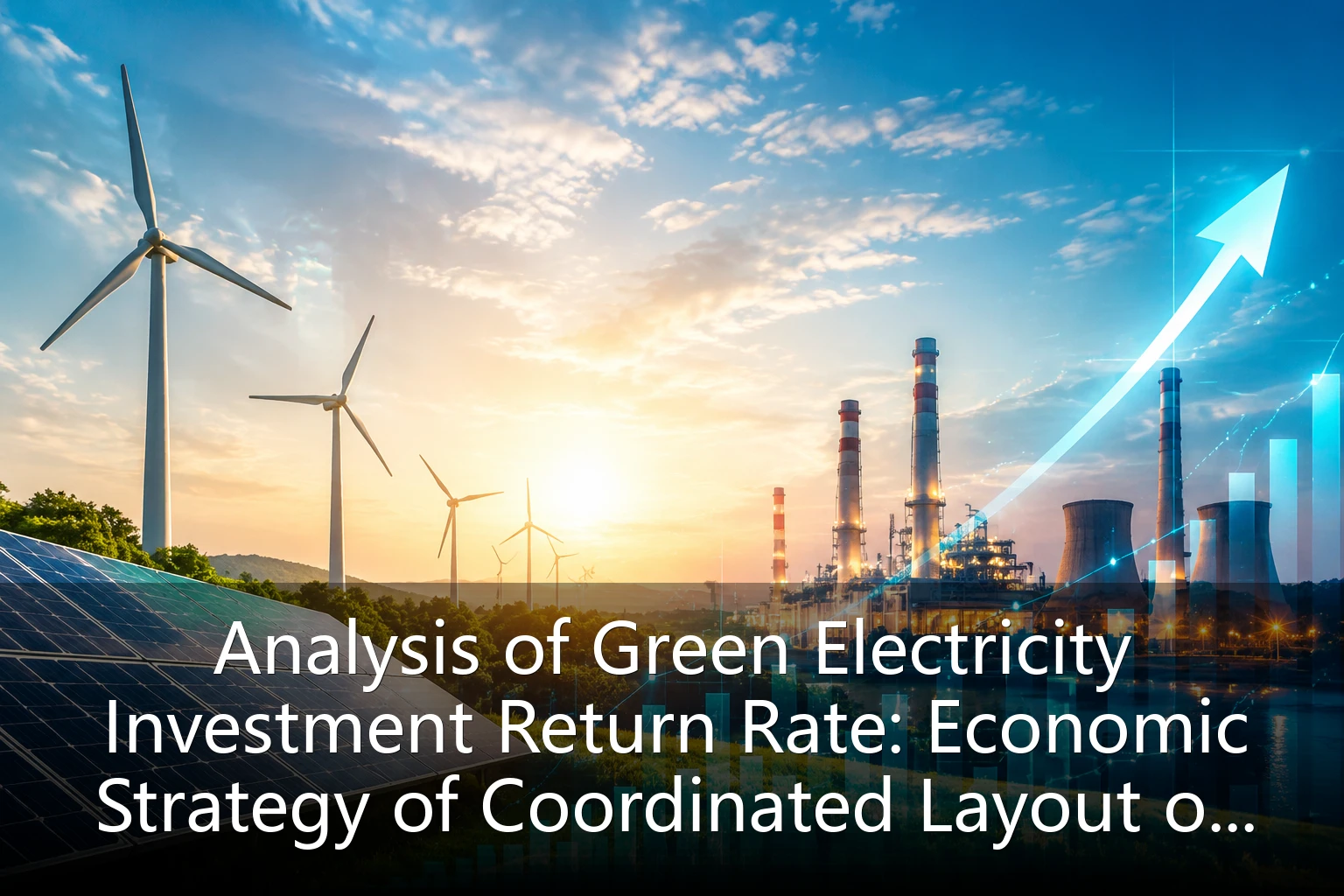
In the wave of global energy transition, Thailand as an important economy in Southeast Asia, is facing a critical moment of energy structure adjustment. As Thailand's national oil company, PTT's strategic layout not only relates to the development of the enterprise itself, but also affects the country's energy security and economic development direction. This article will deeply analyze the return on investment of green power, explore why the collaborative layout of new and old energy has become an inevitable choice, and the economic considerations behind this strategic layout.
Current Situation Analysis of Green Power Investment Returns
In recent years, with technological advancement and economies of scale, the cost of green power (renewable energy generation) has shown a continuous downward trend. The levelized cost of electricity for renewable energy such as solar and wind power has approached or even fallen below traditional fossil fuel power generation, providing a solid economic foundation for green power investment.
According to data from the International Renewable Energy Agency (IRENA), between 2010 and 2020, the global cost of photovoltaic power generation decreased by 85%, and the cost of onshore wind power decreased by 56%. This trend has made green power achieve "grid parity" in many countries and regions, meaning that the generation cost is equivalent to or even lower than the traditional grid benchmark electricity price.
In the Thai market, the return on investment in green power shows the following characteristics:
- High initial investment cost: Although the operating cost is low, the upfront investment in renewable energy projects is still relatively high.
- Generation volatility: Solar and wind power generation are affected by weather and seasons, resulting in intermittency and instability.
- Strong dependence on policies: Subsidy policies, carbon pricing mechanisms, etc. have a significant impact on the economic viability of green power.
- Rapid technological progress: Technological innovation continuously reduces costs and improves efficiency, affecting long-term return expectations.
The Necessity of Collaborative Layout of New and Old Energy
Energy Security Considerations
As an energy-importing country, energy security has always been the core issue of Thailand's national strategy. Although traditional oil and gas resources face carbon emission pressure, they will still play an important role in the foreseeable future. Through the collaborative layout of new and old energy, it is possible to ensure energy supply security while gradually reducing dependence on imported fossil fuels.
Economic Transformation Needs
Energy transition is not only an environmental issue but also an economic one. Thailand's economy is in a critical stage of transformation and upgrading, and the adjustment of energy structure will drive the reconstruction of related industrial chains. The collaborative layout of new and old energy can smooth the transition path, avoid economic fluctuations, and create new economic growth points.
Carbon Neutrality Target Pressure
Under the global background of carbon neutrality, Thailand has committed to achieving carbon neutrality by 2050 and reaching net-zero emissions by 2060. This goal requires Thailand to accelerate the adjustment of energy structure, but completely abandoning traditional energy is not realistic in the short term. The collaborative layout of new and old energy is a practical path to achieve carbon neutrality goals.
The Economic Value of Green Power Investment
Direct Economic Benefits
The direct economic benefits brought by green power investment include:
- Generation cost advantage: With technological advancement, the levelized cost of electricity for green power has become competitive.
- Carbon emission reduction benefits: Through the carbon trading market, green power projects can obtain carbon emission reduction benefits.
- Policy incentives: Policy support provided by the government such as tax incentives and subsidies.
- Long-term stable returns: Renewable energy projects usually have long operation cycles, providing stable cash flow.
Indirect Economic Benefits
- Energy import substitution: Reduce dependence on imported fossil fuels and improve trade balance.
- Industrial upgrading drive: Promote the development of new energy industry chain and create high-value-added job opportunities.
- Environmental health benefits: Reduce health costs and environmental governance expenditures caused by air pollution.
- Technology innovation spillover: Promote technological progress in related fields and enhance overall industrial competitiveness.
Analysis of PTT's Dual-track Strategy
As Thailand's largest energy enterprise, PTT has actively laid out the collaborative development of new and old energy, forming a unique dual-track strategy:
Transformation of Traditional Oil and Gas Business
While maintaining the stability of traditional oil and gas business, PTT is actively promoting business transformation:
- Improving operational efficiency: Reduce the carbon emission intensity of traditional oil and gas business through technological innovation.
- Expanding clean energy business: Develop relatively clean energy forms such as natural gas and hydrogen energy.
- Carbon capture and utilization: Invest in carbon capture, utilization and storage (CCUS) technologies.
Green Power Business Layout
PTT's investment and layout in the green power sector include:
- Large-scale renewable energy projects: Develop large-scale power generation projects such as solar and wind power.
- Distributed energy: Promote distributed energy solutions such as rooftop photovoltaics and community microgrids.
- Energy storage technology: Invest in energy storage technology to solve the intermittency problem of renewable energy.
- Energy digitalization: Develop digital energy solutions such as smart grids and energy internet.
Analysis Framework for Return on Investment
Evaluating the return on investment of green power requires comprehensive consideration of the following factors:
Financial Indicators
- Internal Rate of Return (IRR): Measure the profitability of investment projects.
- Payback period: The time required to recover the initial investment.
- Net Present Value (NPV): Net income after considering the time value of money.
- Levelized Cost of Electricity (LCOE): Economic indicator for measuring generation cost.
Risk Factors
- Policy risks: Impact of energy policy changes on project returns.
- Technology risks: Risk of asset depreciation caused by technological iteration.
- Market risks: Energy price fluctuations, intensified market competition, etc.
- Natural risks: Impact of climate change on renewable energy generation.
Social and Environmental Value
- Carbon emission reduction value: Carbon emission reduction benefits realized through carbon markets.
- Environmental improvement value: Environmental benefits from reducing pollution.
- Job creation value: Job opportunities created during project construction and operation.
- Technology innovation value: Contribution to promoting technological progress in related fields.
Prospects of Thailand's Green Power Market
Policy Support
The Thai government is actively promoting energy transition and has introduced a series of policies to support green power development:
- Renewable Energy Development Plan: Set clear renewable energy development goals and paths.
- Feed-in Tariff (FiT): Provide price guarantees for renewable energy projects.
- Carbon pricing mechanism: Increase the cost of fossil fuels through carbon tax or carbon trading market.
- Green financial support: Provide financing support such as green credit and green bonds.
Market Opportunities
- Large-scale ground power stations: Thailand's abundant solar resources provide development space for large-scale photovoltaic power stations.
- Distributed energy: Industrial and commercial rooftop photovoltaics, community microgrids and other distributed energy applications have broad prospects.
- Energy storage market: Growing demand for energy storage technology to solve the intermittency problem of renewable energy.
- Smart energy: Digital and intelligent energy solutions have huge market potential.
Investment Strategy Recommendations
Portfolio Optimization
- Asset allocation: Reasonably allocate the proportion of new and old energy assets according to risk preference and return objectives.
- Investment timing: Grasp the technological advancement and policy window period, and choose the appropriate investment timing.
- Geographical diversification: Diversify investments in different regions to reduce regional risks.
- Technology diversification: Invest in various renewable energy technologies to diversify technology risks.
Risk Management
- Policy tracking: Closely follow energy policy changes and adjust investment strategies in a timely manner.
- Technology innovation: Continuously pay attention to technology development trends to avoid technology lock-in risks.
- Market monitoring: Regularly evaluate market supply and demand conditions and grasp market dynamics.
- Partners: Choose reliable partners to reduce implementation risks.
Conclusion
The analysis of green power investment returns shows that with technological advancement and economies of scale, the economic viability of renewable energy will continue to improve. However, energy transition is a long-term process, and completely abandoning traditional energy is not realistic in the short term. The collaborative layout of new and old energy is the inevitable choice to achieve energy security, economic transformation and carbon neutrality goals.
PTT's dual-track strategy provides a reference for energy enterprises' transformation. By maintaining the stability of traditional oil and gas business while actively laying out renewable energy, it achieves a smooth transition of energy structure. Investors should comprehensively consider financial indicators, risk factors and social and environmental value, formulate scientific investment strategies, and seize the opportunities brought by energy transition.
In the wave of global energy transition, Thailand is expected to achieve a win-win situation of energy security, economic development and environmental protection through the collaborative layout of new and old energy, providing a "Thai solution" for global energy transition.