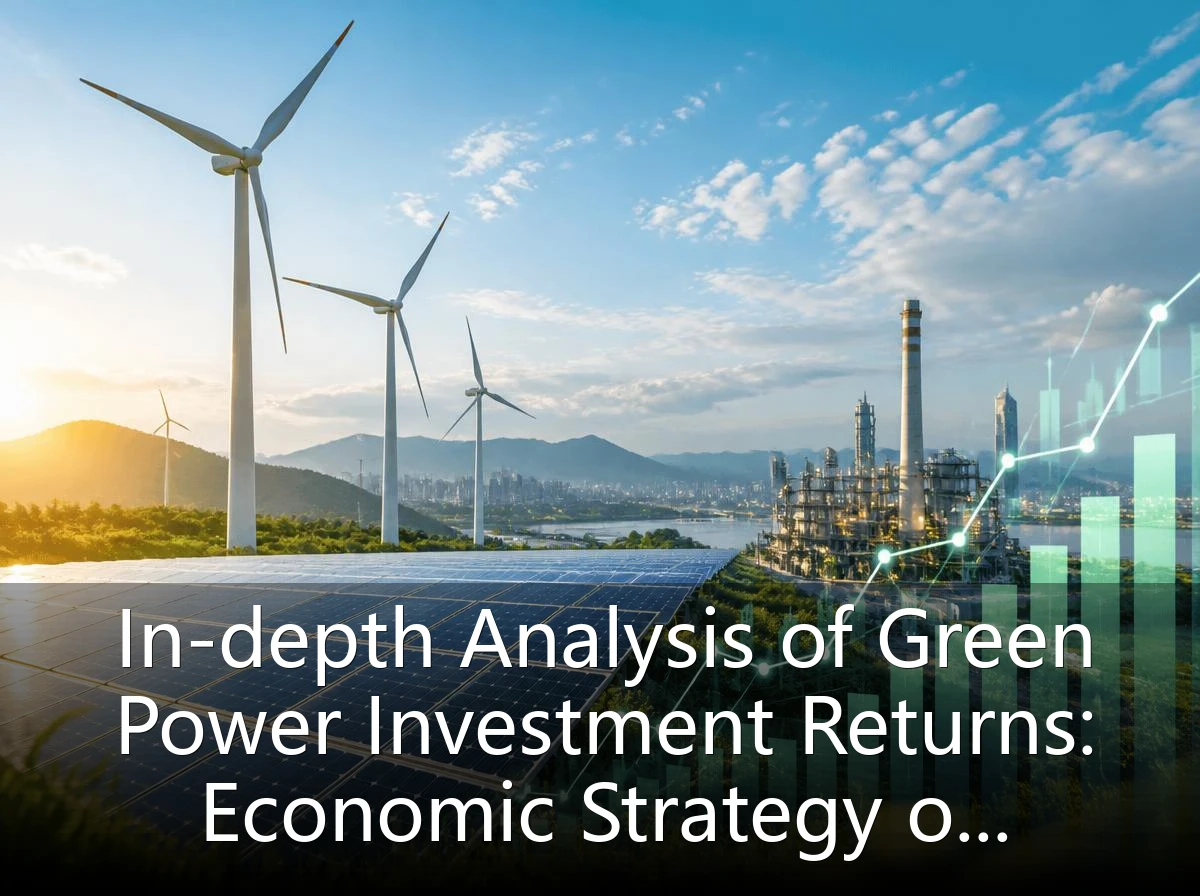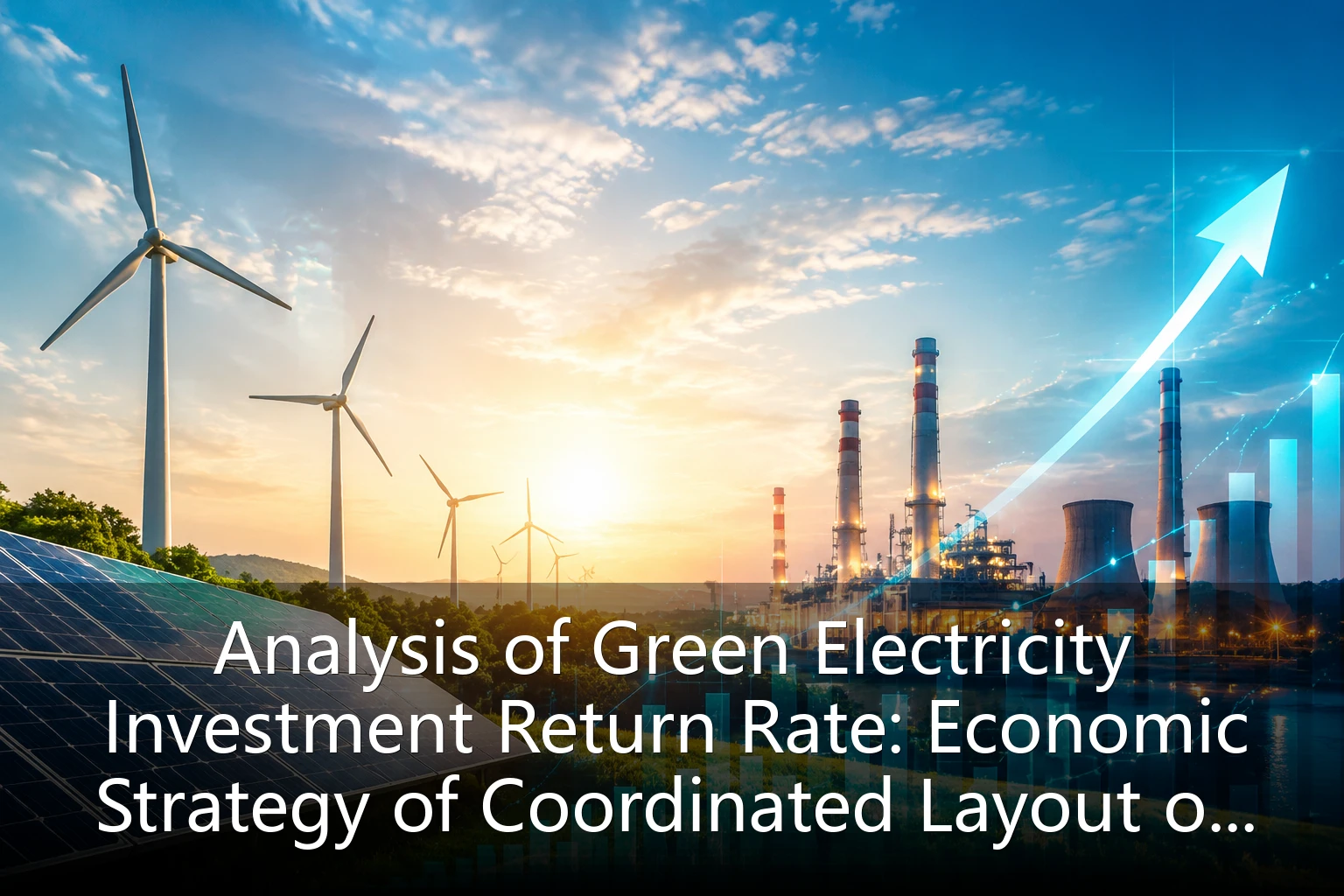

On July 29, 2026, the International Energy Agency (IEA) released its annual report "Global Energy Investment 2026," revealing profound changes in the global energy investment landscape. The report shows that total global energy investment is expected to reach $3.5 trillion in 2026, breaking the $3.5 trillion mark for the first time. Among this, renewable energy investment accounts for over 50% for the first time, reaching $1.8 trillion, while traditional energy investment (including oil, gas, coal, and clean retrofits) still stands at $1.7 trillion. This "dual record high" trend indicates that the global energy transition is entering a new phase of coordinated development between new and traditional energy sources.
\n\nRenewable energy investment leads for the first time
\nThe report notes that solar PV and wind power investment accounts for over 70% of renewable energy investment in 2026, reaching $800 billion and $500 billion respectively. Benefiting from technological progress and economies of scale, the levelized cost of electricity for solar PV and wind has dropped by 40% and 30% respectively over the past five years, making renewable energy economically competitive with traditional energy. In addition, energy storage investment has grown particularly rapidly, with global storage investment expected to reach $120 billion in 2026, up 60% year-on-year, effectively alleviating the intermittent nature of renewable energy.
\n\nTraditional energy investment does not "exit"
\nAlthough renewable energy investment accounts for over half for the first time, traditional energy investment remains resilient. The report shows that upstream oil and gas investment is expected to be $650 billion in 2026, roughly flat with 2025, but about 30% of that goes to clean technologies such as carbon capture, utilization and storage (CCUS) and methane emission reduction. Coal investment continues to decline, but at a slower pace, mainly driven by electricity demand in emerging Asian economies. IEA Executive Director Fatih Birol said: "Against the backdrop where energy security remains a priority for many countries, it is unrealistic to completely abandon traditional energy investment. The key is to ensure these investments are aligned with net-zero emissions pathways."
\n\nBalancing energy security and carbon neutrality
\nThe report particularly emphasizes the impact of geopolitical risks on energy investment. In 2025-2026, the situation in the Middle East, the ongoing Russia-Ukraine conflict, and underinvestment by some oil-producing countries led to tight global crude supply, with Brent crude averaging between $85-95 per barrel. This has prompted many countries, especially in Southeast Asia, to reconsider their energy self-sufficiency. For example, Thailand's PTT Group recently announced it will simultaneously increase investment in domestic natural gas field development and offshore wind power projects to achieve dual goals of energy security and low-carbon transition.
\n\nChina and India lead investment growth
\nRegionally, China and India continue to be the main engines of global energy investment growth. China's energy investment in 2026 is expected to exceed $800 billion, with renewables accounting for 65%, while China also boosts investment in natural gas infrastructure and CCUS projects. India focuses on solar power and grid modernization, with total investment exceeding $150 billion. In contrast, energy investment growth in the EU and US has slowed, but they remain leaders in clean energy technology R&D and hydrogen energy.
\n\nEconomics of co-deployment of new and traditional energy
\nIEA report points out that solely betting on either new or traditional energy carries risks. On one hand, the volatility of renewable energy and storage costs still need time to be resolved; on the other hand, high carbon emissions and resource constraints of traditional energy are becoming increasingly prominent. Therefore, many countries and companies have adopted a "dual-track" strategy: while expanding renewable energy deployment, they also clean up existing fossil fuel facilities and invest in natural gas as a transitional fuel.
\nFor instance, in Southeast Asia, Thailand's Ministry of Energy indicated after the report release that it will accelerate the expansion plan for liquefied natural gas (LNG) terminals and simultaneously launch a 10 GW offshore wind power tender. The CEO of PTT Group said: "We no longer see new and traditional energy as opposites, but as a continuous spectrum. Through smart grids and digital management, we can leverage the strengths of both."
\n\nFuture outlook: investment trends and risks
\nIEA predicts that global energy investment will reach $4.2 trillion by 2030, with renewable energy's share rising to 65%. However, the report also warns that if countries fail to simultaneously address grid infrastructure, permitting, and policy consistency, the energy transition may face bottlenecks. In addition, incomplete carbon pricing mechanisms and green trade barriers (such as the EU Carbon Border Adjustment Mechanism) could increase investment uncertainty.
\n\nImplications for investors
\n- \n
- Diversify allocation: Focus on investment opportunities in both new energy technologies (e.g., solar PV, storage, hydrogen) and traditional energy cleanup (e.g., CCUS, natural gas). \n
- Geographic diversification: Target markets with stable policies and high growth potential, such as Southeast Asia, India, and China. \n
- Risk hedging: Use tools such as oil-gas-green electricity composite indices and carbon trading prices to hedge risks. \n
In summary, this IEA report once again confirms a trend: energy transition is not an either-or choice, but a complex system engineering requiring collaboration between new and traditional energy. For policymakers and investors, understanding and grasping this "dual-track" logic will be key to winning in the energy sector over the next decade.