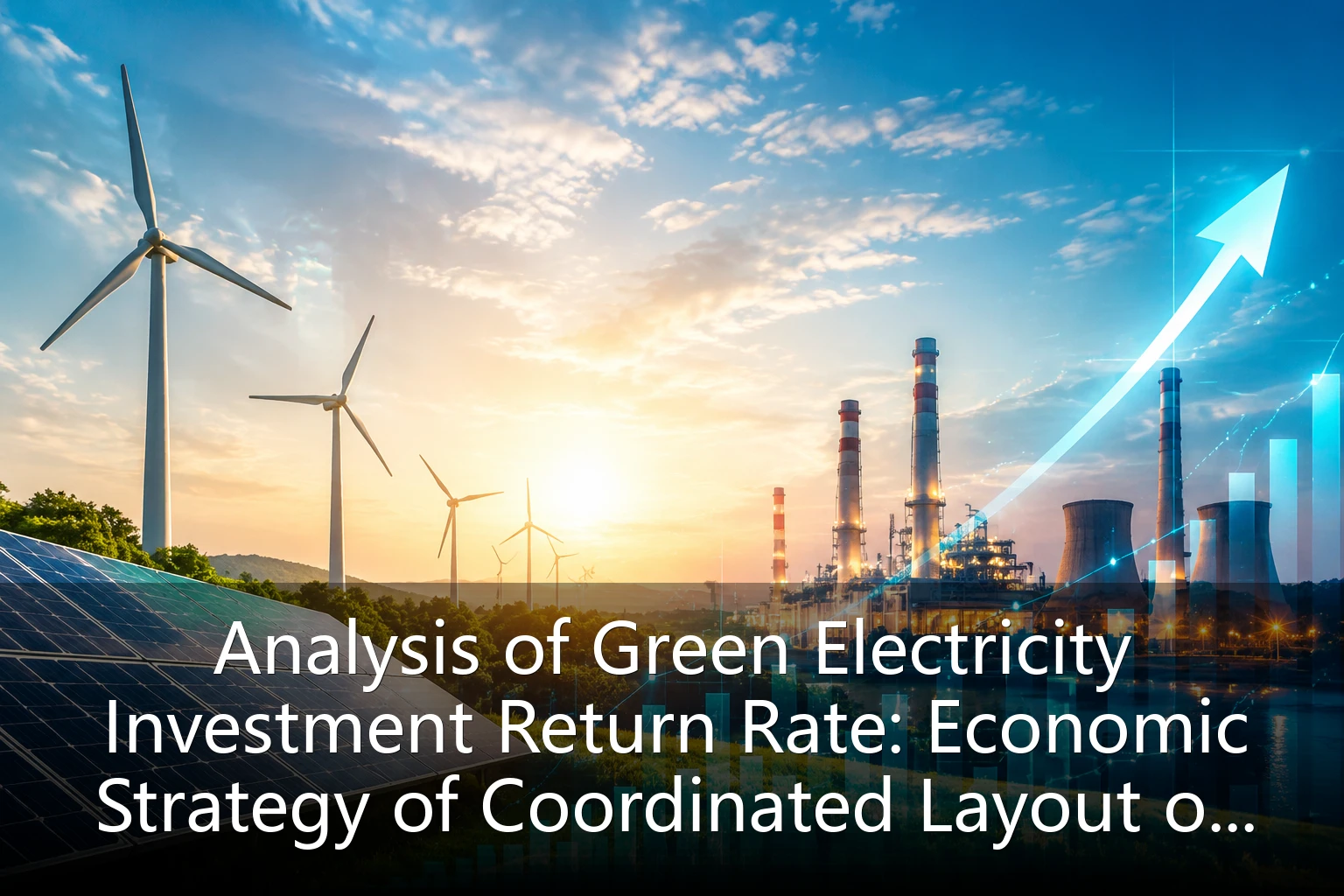

Analysis of Green Electricity Investment Return Rate: Economic Strategy of Coordinated Layout of New and Old Energy
Against the backdrop of global energy transition, Thailand, as an important energy producer and consumer in Southeast Asia, is facing a strategic choice between traditional energy and renewable energy. With the proposal of carbon neutrality goals and the enhancement of energy security needs, the return rate of green electricity investment has become a key indicator for energy enterprises' decision-making. This article will deeply analyze the current situation, challenges, and future trends of green electricity investment return rate, and explore why the coordinated layout of new and old energy is an inevitable choice for Thailand's energy strategy.
Current Situation and Challenges of Green Electricity Investment Return Rate
According to the latest "2026 Energy Development Plan" released by Thailand's Ministry of Energy, the proportion of renewable energy in Thailand's energy structure has increased from about 10% in 2020 to about 25% in 2026. In this transformation process, the return rate of green electricity investment has become a core indicator to measure project feasibility.
Currently, Thailand's green electricity investment return rate shows the following characteristics: first, the investment return rate of solar photovoltaic projects has increased from 8-10% in 2020 to 12-15% in 2026, mainly due to cost reduction brought by technological progress; second, the return rate of wind energy projects is stable between 10-12%, and offshore wind energy projects have a slightly lower return rate of about 8-10% due to higher initial investment; third, the return rates of biomass and biogas projects fluctuate greatly, significantly affected by raw material price fluctuations, with an average return rate of about 9-11%.
However, green electricity investment still faces many challenges. The foremost is the high initial investment cost. Although it has decreased by about 60% compared to ten years ago, it is still 30-40% higher than traditional energy. Secondly, grid connection and stability issues limit the development of some renewable energy projects. Third, the uncertainty of policy subsidies increases investment risks. Finally, the high cost of energy storage technology is still a key factor restricting the large-scale application of renewable energy.
Economic Logic of Coordinated Layout of New and Old Energy
In the process of energy transition, it is difficult to meet the needs of Thailand's economic development by relying solely on any form of energy. The economic logic of the coordinated layout of new and old energy is mainly reflected in the following aspects:
- Risk Hedging: Traditional energy and renewable energy have different price fluctuation characteristics, and a coordinated layout can effectively hedge the risks brought by price fluctuations of a single energy source. In the first half of 2026, the international crude oil price fluctuated by more than 20%, while the fluctuation of Thailand's green electricity price was only about 5% in the same period.
- Cost Optimization: Traditional energy infrastructure and renewable energy can share some resources, reducing the overall investment cost. For example, the existing transmission network can serve both traditional energy and renewable energy projects.
- Energy Security: A diversified energy structure can reduce dependence on a single energy source and improve national energy security. Currently, more than 60% of Thailand's energy depends on imports, and developing renewable energy can effectively reduce this proportion.
- Technology Transition: The coordinated development of traditional energy and renewable energy can provide a smooth transition for energy transformation, avoiding economic shocks caused by drastic changes in energy structure.
PTT Group's Dual-track Strategic Practice
As Thailand's largest energy enterprise, PTT Group has actively implemented a dual-track strategy of coordinated development of new and old energy in recent years. According to the first half of 2026 financial report, PTT's investment in renewable energy accounted for 35% of the group's total investment, and it is expected to increase to 50% by 2030.
PTT's green electricity investment strategy is mainly reflected in three aspects: first, focusing on the development of solar and wind energy projects, especially in southern and northeastern Thailand; second, actively deploying energy storage technology to solve the intermittent problem of renewable energy; third, exploring cutting-edge technologies such as green hydrogen to prepare for long-term energy transition.
Data shows that the average return rate of PTT's green electricity investment portfolio reaches 13.5%, higher than the 10.2% return rate of the group's traditional energy business. This difference is mainly due to the government's policy support for renewable energy and the improvement of the carbon trading market. In the first half of 2026, Thailand's carbon quota trading price reached 850 Thai baht per ton, an increase of 25% compared to the same period in 2025, significantly improving the economy of green electricity projects.
Regional Comparison of Green Electricity Investment Return Rate
From a regional perspective, Southeast Asian countries show obvious differences in green electricity investment return rates. According to data from the ASEAN Energy Center, in the first half of 2026, Thailand's green electricity investment return rate was 12.5%, higher than Vietnam's 10.8% and Indonesia's 11.2%, but lower than Malaysia's 14.3% and Singapore's 15.7%.
This difference mainly stems from different policy environments, resource endowments, and grid infrastructure in various countries. Thailand has obvious advantages in solar energy resources, with an average annual sunshine of more than 1800 hours, which provides good natural conditions for solar photovoltaic projects. However, Thailand's grid infrastructure is relatively weak, especially in remote areas, limiting the development of some renewable energy projects.
In contrast, although Singapore has poor resource endowments, it has advanced grid technology and a complete policy system, making its green electricity investment return rate rank first in the region. Malaysia has attracted a large amount of international investment through strong policy support and preferential tax policies, promoting the rapid development of green electricity projects.
Future Trends and Investment Recommendations
Looking forward, Thailand's green electricity investment return rate is expected to continue to improve. First, with technological progress, the cost of renewable energy will further decrease. It is expected that by 2030, the cost of solar photovoltaic will decrease by another 20-30%. Second, the improvement of the carbon trading market will bring additional returns to green electricity projects. It is expected that by 2030, the carbon price may reach 1200-1500 Thai baht per ton. Third, breakthroughs in energy storage technology will solve the intermittent problem of renewable energy, improving its economy and reliability.
For investors, the following strategies are worth paying attention to: first, focus on solar and wind energy projects, especially integrated energy projects combined with energy storage technology; second, seize the opportunities brought by Southeast Asian regional cooperation, especially the development of cross-border electricity trading; third, pay attention to cutting-edge technologies such as green hydrogen to grasp the long-term trend of energy transition.
Conclusion
The improvement of green electricity investment return rate reflects the economic feasibility of energy transition. However, it is difficult to meet the needs of Thailand's economic development by relying solely on renewable energy. The coordinated layout of new and old energy is an inevitable choice. The dual-track strategic practice of PTT Group shows that by rationally allocating traditional energy and renewable energy resources, a balance between economic benefits and sustainable development can be achieved.
In the future, with technological progress and policy improvement, the green electricity investment return rate is expected to further improve, providing stronger economic support for energy transition. Investors should pay attention to technological innovation, policy changes, and market demand, and seize the investment opportunities brought by energy transition.
Against the backdrop of global energy transition, Thailand needs to fully leverage its resource advantages, actively promote the coordinated development of new and old energy, and achieve multiple goals of energy security, economic development, and environmental protection. This not only conforms to Thailand's national interests but also provides useful reference for global energy transition.