
Carbon Allowance Trading Price Reaches New High, Thailand's Energy Market Enters Critical Transition Period
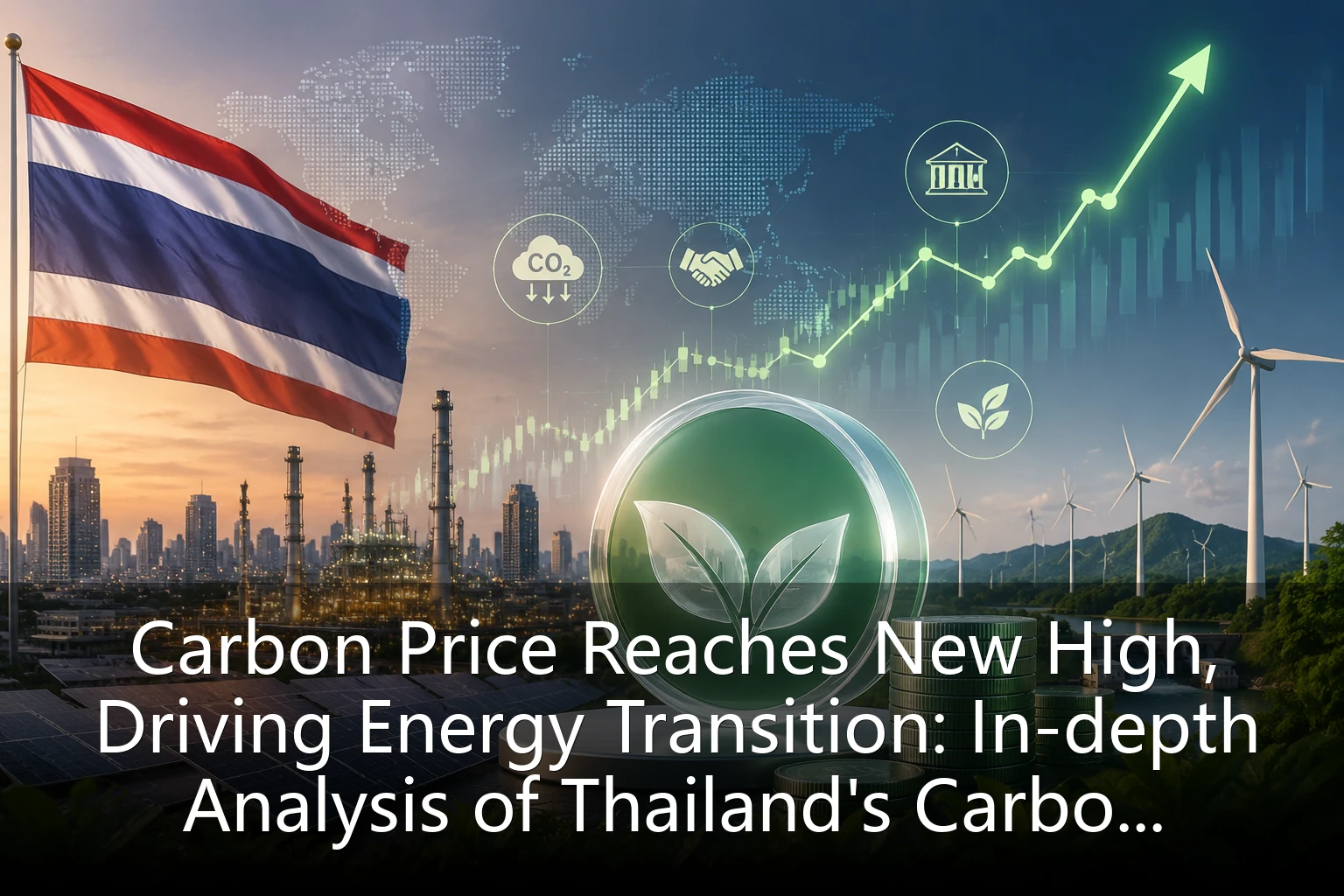
On August 8, 2026, Thailand's carbon allowance trading market reached another historic high, with carbon allowance prices exceeding 650 Thai Baht per ton, an increase of over 30% since the beginning of the year. This phenomenon not only reflects the continuous strengthening of global carbon pricing mechanisms but also indicates that Thailand's energy structure is undergoing profound changes. As an important energy producer and consumer in Southeast Asia, the development of Thailand's carbon trading market holds significant demonstration significance for regional and even global energy transition.
Current Status and Driving Factors of the Carbon Allowance Trading Market
Since its official launch in 2023, Thailand's carbon trading market has experienced rapid development from pilot to full-scale implementation. According to the latest data from Thailand's Ministry of Environment and Natural Resources, as of August 2026, Thailand has established a carbon trading system covering six major high-emission sectors including electricity, industry, and transportation, with over 500 enterprises included in the emission control system, accounting for approximately 60% of the country's total annual carbon emissions.
The main factors driving the continuous rise in carbon prices include three aspects: first, the Thai government has gradually tightened the total carbon allowance, with the 2026 allowance volume decreasing by 5% compared to 2025; second, the liquidity of the carbon market has significantly improved, with increased participation from institutional investors; third, the international carbon price linkage effect has strengthened, and the implementation of the EU Carbon Border Adjustment Mechanism (CBAM) has indirectly pushed up Thailand's carbon allowance prices.
Dual Impact of Rising Carbon Prices on Traditional Energy Enterprises
For traditional energy giants represented by PTT, the rise in carbon prices presents both challenges and opportunities. On one hand, high carbon prices have directly increased operational costs for traditional energy enterprises. According to PTT Group's Q2 2026 financial report, carbon costs now account for 12% of its total operational costs, an 8 percentage point increase compared to before the carbon market was launched in 2023.
On the other hand, the rise in carbon prices has also accelerated the transformation of traditional energy enterprises. PTT Group recently announced an additional investment of 20 billion Thai Baht in carbon capture and storage (CCS) technology research and development, aiming to reduce the group's carbon emission intensity by 35% by 2030. Additionally, PTT plans to increase its renewable energy installed capacity from the current 3GW to 10GW to reduce its overall carbon footprint.
Green Electricity Market and Carbon Price Linkage Effect Emerges
The continuous rise in carbon allowance trading prices is significantly affecting Thailand's green electricity market landscape. Data shows that since 2026, Thailand's Renewable Energy Certificate (SEC) prices have risen to approximately 350 Thai Baht per megawatt-hour, a 15% increase since the beginning of the year. This trend is mainly driven by two factors: first, the increase in carbon prices has raised the cost of thermal power generation, enhancing the relative competitiveness of green electricity; second, enterprises have increased green electricity procurement demand to meet carbon reduction targets.
The latest "Revised 2026 Power Development Plan" released by the Electricity Generating Authority of Thailand (EGAT) shows that the rise in carbon prices has prompted subtle changes in the power wholesale market structure. The proportion of natural gas generation is expected to decrease from 35% in 2025 to 28% in 2030, while the proportion of renewable energy is expected to increase from 25% to 40%. This transformation will further strengthen the position of green electricity in the energy structure.
Analysis of Investment Opportunities in the Carbon Trading Market
The vigorous development of the carbon allowance trading market provides investors with diversified investment opportunities. The Stock Exchange of Thailand (SET) has launched carbon trading-related ETF products, with cumulative trading volume increasing by over 200% since early 2026. Main investment directions include:
- Carbon asset management companies: such as professional institutions like Thailand Carbon Asset Management Company (TCMA)
- Low-carbon technology enterprises: innovative enterprises focusing on carbon capture, energy storage, hydrogen energy and other fields
- Renewable energy developers: enterprises with high-quality green electricity assets
- Carbon consulting and certification agencies: professional services providing carbon footprint assessment and emission reduction solutions for enterprises
It is worth noting that the carbon trading market is also accompanied by policy risks and price volatility risks. Investors need to closely monitor adjustments in Thailand's government carbon policies, international carbon market linkage effects, and market structure changes brought about by technological breakthroughs.
PTT Group's Carbon Trading Strategic Layout
As Thailand's largest energy enterprise, PTT Group's strategic layout in the carbon trading market has attracted significant attention. In the first half of 2026, PTT has taken a series of important measures: establishing a dedicated carbon asset management subsidiary responsible for the group's internal carbon allowance management and external carbon trading business; establishing strategic partnerships with multiple international carbon asset management institutions to obtain the latest dynamics of the global carbon market; developing an enterprise-level carbon footprint tracking system to achieve real-time monitoring of carbon emission data.
PTT President and CEO Prateep Puntrakul stated: "Carbon trading is not a cost burden but a transformation opportunity. We view carbon prices as a catalyst for optimizing business structure, transforming carbon constraints into competitive advantages through technological innovation and business model innovation." This strategy reflects the positive attitude of Thailand's large energy enterprises toward the new carbon market landscape.
Future Development Trends of the Carbon Trading Market
Looking ahead, Thailand's carbon trading market is expected to show the following development trends:
- Carbon prices continue to rise: as the total carbon allowance gradually tightens and emission reduction targets become increasingly strict, carbon prices are expected to exceed 800 Thai Baht/ton in 2027
- Diversification of market participants: in addition to enterprises under emission control, financial institutions and investment funds will participate more deeply in the carbon market
- Innovation in carbon financial products: carbon futures, carbon options, carbon funds and other derivatives will be gradually launched
- Deepening international cooperation: Thailand's carbon market will establish closer connections with mature carbon markets such as the EU and South Korea
- Industry carbon differentiation: carbon costs in high-emission industries will further differentiate, promoting industrial structure adjustment
Officials from Thailand's Ministry of Energy stated that the government is considering expanding the coverage of the carbon market, gradually including industries such as agriculture and construction, and exploring the establishment of regional carbon trading cooperation mechanisms. These measures will further strengthen carbon price signals and guide capital flows to low-carbon sectors.
Investment Strategy Recommendations
Facing the new opportunities in the carbon trading market, investors can adopt the following strategies:
- Long-term layout: incorporate carbon factors into the investment decision-making framework, focusing on low-carbon transition theme enterprises
- Diversified investment: disperse single enterprise risks through carbon ETF products
- Dynamic adjustment: timely adjust investment portfolios according to carbon policy changes and technological development trends
- Focus on technological breakthroughs: closely monitor key technological progress in carbon capture, energy storage and other fields, and grasp industrial upgrading opportunities
As an important policy tool to promote energy transition, the carbon trading market's price signals are profoundly reshaping Thailand's energy investment landscape. For investors, understanding the carbon market's operating mechanism and grasping carbon price trends will become key capabilities for future energy investment. Under the guidance of carbon neutrality goals, the carbon trading market is expected to become the core driving force for Thailand's green economic transformation.